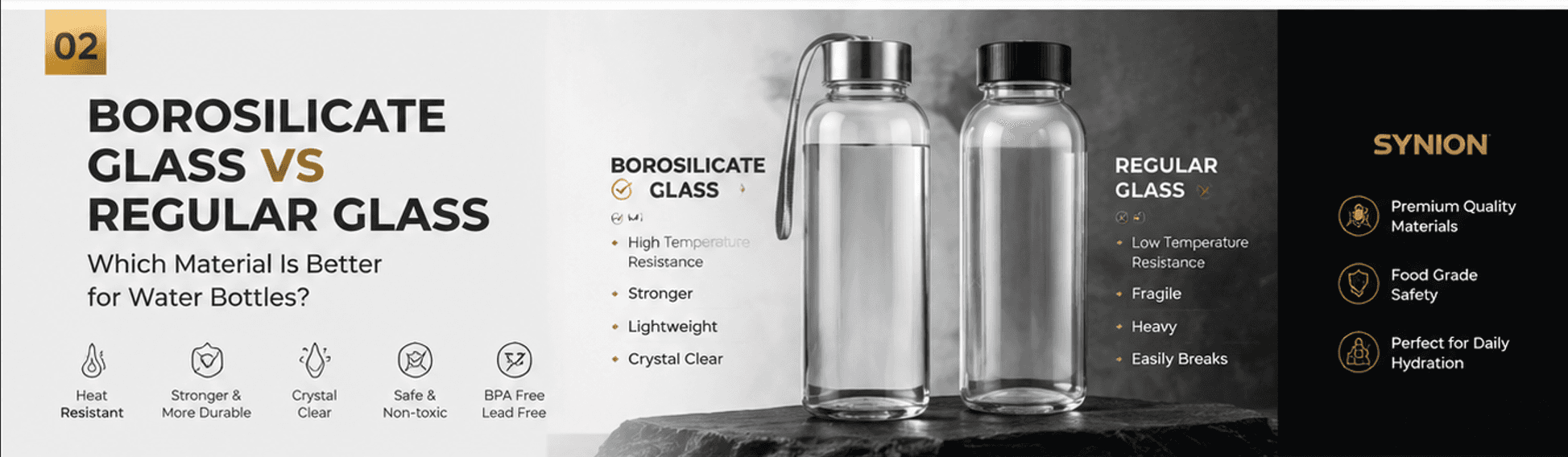
When buyers compare materials for a premium water bottle line, one question appears again and again: is a borosilicate glass water bottle better than a regular glass bottle? For most reusable drinkware projects, borosilicate glass is preferred because it offers better thermal stability, strong clarity and a premium product feel.
This guide compares borosilicate vs soda lime glass from a B2B sourcing perspective, including safety, heat resistance, durability, weight, appearance and product positioning.
Quick Answer: Which Material Is Better?
Borosilicate glass is usually better for premium reusable water bottles because it is more resistant to temperature change, has excellent clarity and supports a high-end drinking experience. Regular soda-lime glass can be suitable for lower-cost drinkware, but it is less ideal when the product needs stronger heat resistance and premium positioning.
What Is Borosilicate Glass?
Borosilicate glass is a glass material made with silica and boron trioxide. The material is known for a lower thermal expansion rate than regular soda-lime glass. In practical terms, this means a high borosilicate glass bottle can handle temperature changes better than standard glass when designed and used correctly.
For water bottle buyers, borosilicate is valued for its clear appearance, smooth drinking experience and premium perception. It is often selected for reusable bottles, tea bottles, coffee-related drinkware and private-label hydration collections.
What Is Regular Glass?
Regular glass used in many consumer products is commonly soda-lime glass. It is widely available and cost-effective, which makes it suitable for jars, cups, containers and some drinkware. However, compared with borosilicate glass, it generally has lower thermal shock resistance and can feel heavier depending on structure.
Heat Resistance and Temperature Change
A heat resistant glass bottle should be designed with both material and structure in mind. Borosilicate glass performs better when a bottle may be exposed to warm drinks, cleaning temperature changes or different climates during distribution. This is one reason premium buyers often prefer borosilicate for reusable bottles.
However, no glass bottle should be treated as unbreakable. Even borosilicate glass needs proper wall thickness, lid fit, sleeve protection and packaging.
Safety: Is Borosilicate Glass Food Grade?
Glass itself is generally valued for a clean, neutral drinking experience. For a food grade glass bottle, buyers should also evaluate lids, seals, sleeves, printing inks and packaging materials. A bottle can be made from quality glass but still fail a buyer's requirements if accessories are not properly selected.
For retail and corporate gift programs, ask suppliers about BPA-free lids, food-contact components and decoration methods suitable for drinkware. A BPA free glass bottle claim should consider all contact parts, not just the glass body.
Durability and Breakage Risk
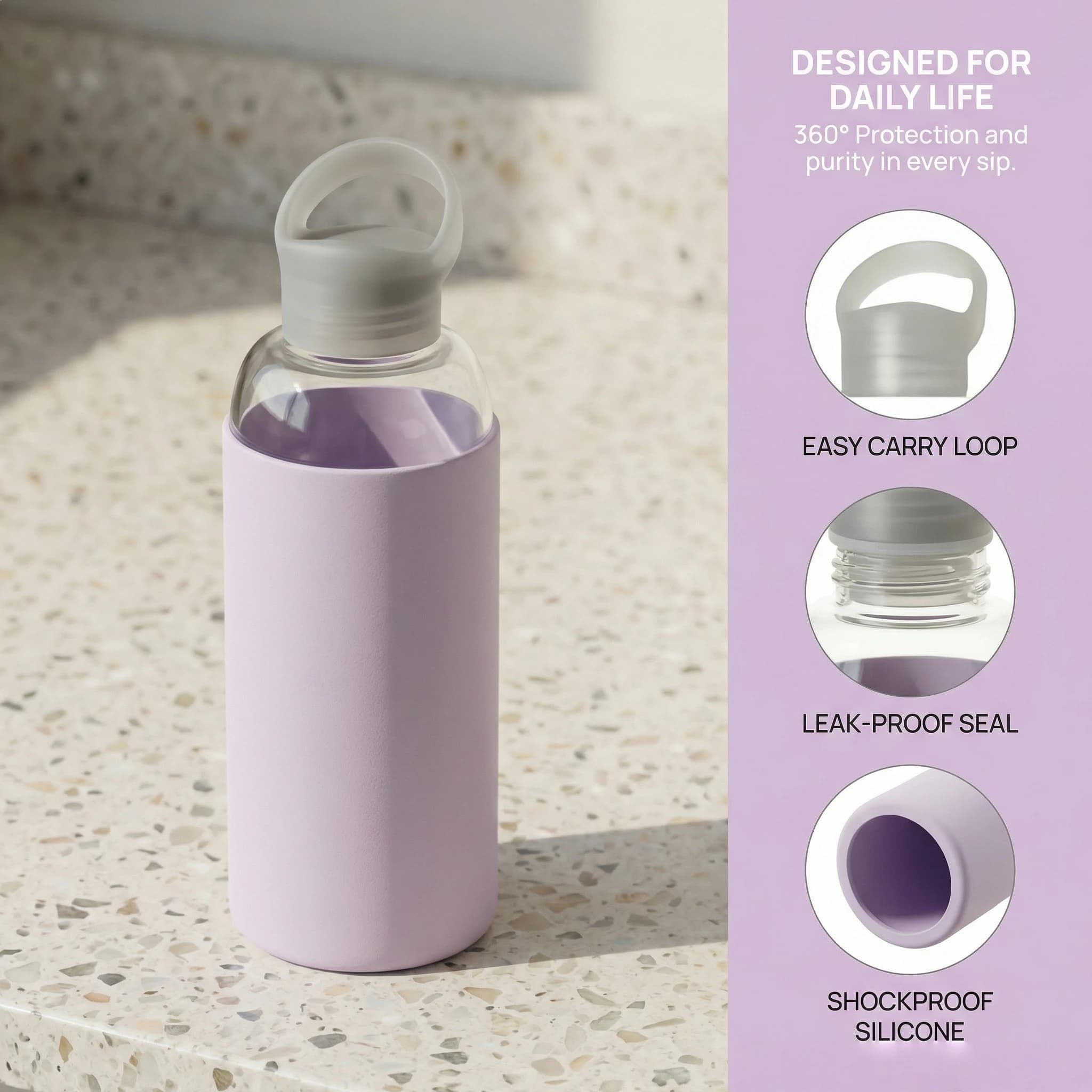
Borosilicate glass can be more resistant to thermal stress, but it is still glass. Durability depends on material, wall thickness, bottle shape, base structure, sleeve protection and packaging. For active lifestyle channels, a silicone sleeve or neoprene sleeve can improve grip and help protect the bottle from everyday bumps.
For ecommerce and international shipping, packaging design is also essential. Inner boxes, dividers, carton strength and palletization can reduce breakage during transportation.
Appearance and Brand Positioning
Borosilicate glass often provides a clean, transparent and premium look. This works well for lifestyle brands, office drinkware, wellness products, corporate gifts and private-label collections. Regular glass can still look attractive, but borosilicate usually supports a stronger premium story.
Borosilicate Glass vs Regular Glass Comparison
| Factor | Borosilicate Glass | Regular Soda-Lime Glass |
|---|---|---|
| Heat resistance | Higher resistance to temperature change | Lower resistance to thermal shock |
| Weight | Can be lighter depending on design | Can feel heavier depending on structure |
| Clarity | Premium clear appearance | Good clarity, varies by product |
| Product positioning | Premium reusable bottle lines | Cost-sensitive drinkware and containers |
| Best use | Reusable glass bottle, tea bottle, private label hydration | General glassware, jars, standard cups |
Which Should Your Brand Choose?
If your goal is a premium reusable glass bottle for retail, gifts, wellness or private-label drinkware, borosilicate glass is usually the stronger choice. If your project is highly price-sensitive and does not require high thermal stability, regular glass may still be practical.
For B2B buyers, the decision should combine material, target market, MOQ, customization, packaging and landed cost. SYNION can help evaluate whether a borosilicate glass bottle, silicone sleeve bottle, neoprene sleeve bottle or glass tumbler is the right direction for your product line.